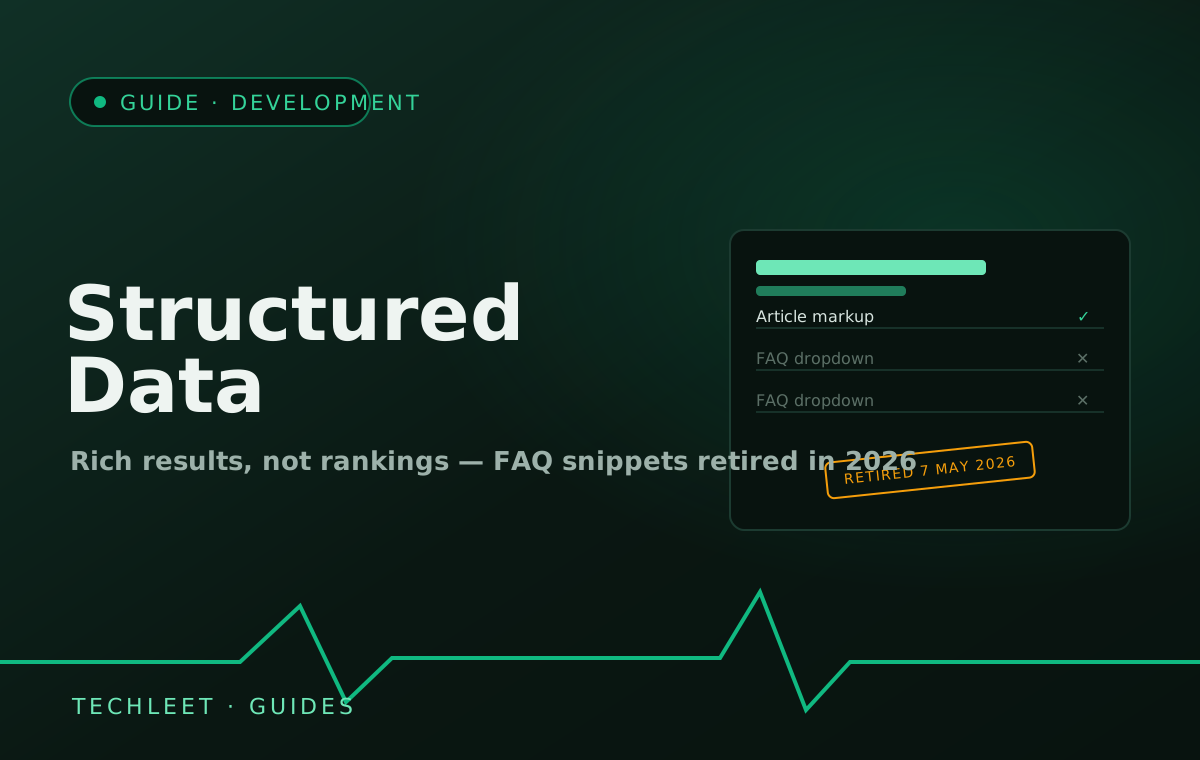
Structured data — the JSON-LD markup wrapped around a page's content — doesn't move Google rankings on its own; by Google's own documentation it only makes a page eligible for enhanced rich results. That eligibility can also disappear overnight through no fault of the markup: Google retired the FAQ rich result on 7 May 2026, and every site relying on it lost the feature with no warning, no Search Console error, and no change required to the code itself.
We've carried Article, BreadcrumbList, and FAQPage markup on every guide on this site since July 2026, so the FAQ change below isn't a hypothetical for us — it's a real example of why this kind of markup needs the same ongoing attention as anything else on a live site, not a box ticked once at launch.
What structured data is actually for
Structured data describes a page's content in a format search engines can parse directly, instead of inferring it from visible text. Google's documentation states plainly that adding it "doesn't directly affect ranking" — what it does is make a page eligible for rich results: the enhanced listings with star ratings, event dates, product prices, or breadcrumb trails instead of a plain blue link. Article, Product, LocalBusiness, Review, Event, JobPosting, and BreadcrumbList are all still live, active rich-result types. There's no downside to getting it wrong, either — missing or invalid structured data causes no penalty; the page just stays eligible for standard results only.
The FAQ rich result disappeared, with nothing to catch it
FAQ was one of the most widely adopted rich result types, letting a search listing show expandable question-and-answer dropdowns straight in Google's results. Google pulled it back to a narrow set of "well-known, authoritative government and health websites" in 2023, then retired it from Search entirely on 7 May 2026. Support in the Rich Results Test followed in June 2026, and Search Console API support is scheduled to drop in August 2026. The FAQPage schema type itself was never deprecated — Google's own guidance says the existing markup causes no harm and needs no changes — Google simply stopped using it to render the dropdown. For a business that had been counting on that extra visual space in its listing, the result vanished with nothing logged anywhere to explain it: no error in Search Console, no email, no changelog entry on the page itself. The only way to notice is watching the listing directly, or a change in impressions on a result that used to stand out.
Why this belongs in ongoing maintenance, not a launch checklist
This is the same drift already covered in our guide on Core Web Vitals — a score or a feature can slip quietly, with nothing visibly broken, so it's the easiest thing to stop checking once a site has launched. Structured data adds a wrinkle Core Web Vitals doesn't have: the thing that changes isn't anything on your own site, it's a decision Google makes about how it uses markup that hasn't changed at all. A one-time launch checklist has no way to catch that, because the checklist was correct the day it was written. Reviewing a site's live structured data — what's still eligible, what Search Console's Enhancements report flags as an actual syntax error versus what's simply an unused feature — is exactly the kind of check that belongs in a recurring maintenance pass, the same discipline covered in our website maintenance guide.
Frequently asked questions
Does structured data improve my Google ranking?
Not directly. Google's own documentation is explicit that structured data is not a ranking factor — adding it can make a page eligible for rich results (the enhanced listings with extra visual detail), but a page with no structured data at all ranks on the same basis as one with perfect markup. Missing or invalid structured data carries no penalty either; the page simply stays eligible only for standard results.
What happened to FAQ rich results in Google Search?
Google retired the FAQ rich result from Search on 7 May 2026, removed it from the Rich Results Test in June 2026, and is dropping Search Console API support for it in August 2026. The FAQPage schema type itself was not deprecated — Google says existing markup causes no harm and requires no changes — Google simply stopped using it to show the expandable question dropdowns under a search listing.
If my FAQ schema stops working, will Search Console show an error?
No. Google's position is that unused structured data doesn't cause problems for a site, so there is nothing for Search Console's Enhancements report to flag. The markup is still technically valid; Google has just changed what it does with it. The only way to notice is watching the search listing itself, or a drop in impressions on a result that used to carry the FAQ dropdown.
Which structured data types are still active in Google Search?
Most of Google's rich result gallery is unaffected — Article, Product, LocalBusiness, Review, Event, JobPosting, and BreadcrumbList markup all still enable their respective enhanced listings. FAQ (and HowTo before it) are the exceptions Google has pulled back to narrow or no eligibility; the rest of the gallery keeps working the way it always has.
How do I check what structured data is on my site and whether it's valid?
Google's Rich Results Test checks a single URL and confirms which rich result types it's eligible for (minus FAQ, as of June 2026). Search Console's Enhancements report does the same across the whole site over time and flags syntax errors — missing required fields, wrong value types, malformed JSON-LD — separately from eligibility, which is the distinction worth knowing: a syntax error is a real bug to fix, a dropped feature like FAQ is not.