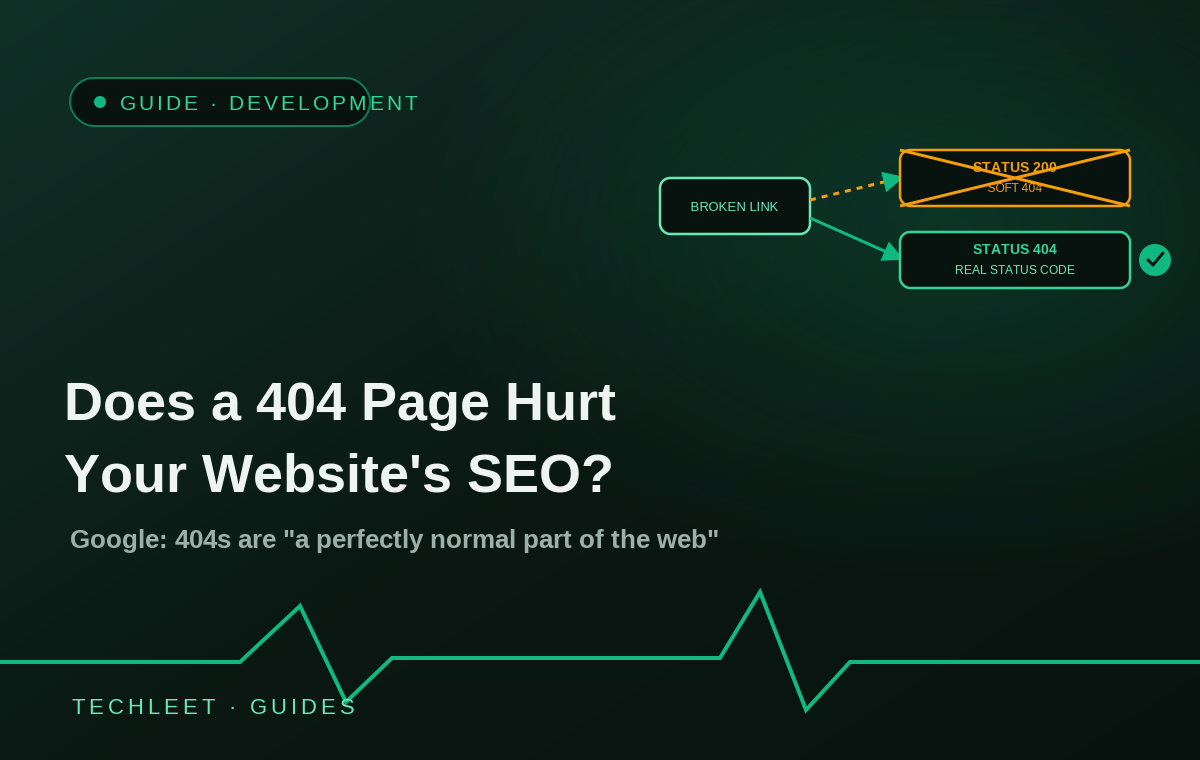
A 404 error on its own does not hurt a website's search ranking. In a 2011 blog post, Google Search Central put it plainly: "404 errors are a perfectly normal part of the web," and a URL returning one does not count against how the rest of the site performs. What actually causes damage is a soft 404 — a missing page that returns a 200 success status instead of a real 404, which leaves Google unsure whether the page still exists.
The mistake is rarely the error itself
Most of the custom 404 pages we end up building aren't a reaction to too many broken links — they get built the same week as a redesign's URL map, once someone notices a handful of old links were never going to make that list no matter how carefully it was put together. A contact form shared on social media years ago, a PDF someone bookmarked, a page a directory listing still points to by mistake — the map catches the ones anyone remembered to check, and a 404 page is what catches the rest.
The actual risk shows up earlier than that, and quietly. Plenty of CMS platforms and static site setups serve a perfectly normal-looking "page not found" message without ever telling the server to send a 404 status — the page renders, so nobody notices anything is wrong, but the response underneath is a 200. That mismatch is the soft 404 Google's documentation warns about, and it's a one-line thing to check: request the broken URL directly (curl -I against the address, not just loading it in a browser) and read the actual status line. If it says 200 instead of 404, the page everyone thinks is handling errors correctly isn't.
What the page itself needs to do
Once the status code is right, the rest is about not making a visitor's dead end worse than it has to be:
- Same header, navigation, and branding as every other page. A visitor who clicks a broken link should still recognise they're on the same business's website, not land on a bare, unstyled page that looks like the whole site is down.
- A plain explanation and a way back. A link to the homepage or key pages, or a search box, rather than just the words "page not found" with nowhere to go next.
- No technical detail in the message. The same discipline our code review guide already applies to any error page holds here too — no file paths, stack traces, or framework version numbers, even on a page as ordinary-looking as this one.
None of this needs to be elaborate. The least effective 404 pages we see aren't badly designed — they're the hosting platform's unedited default, left in place because nobody thought to check what a broken link actually shows a visitor.
Checking this is the same habit as checking a redirect map after launch, not assumed from a page rendering correctly: a direct request, confirmed. It's part of what our website maintenance plans cover as ordinary upkeep — not just whether pages load, but what happens on the ones that are supposed to say they can't.
Frequently asked questions
Does a 404 error hurt my website's SEO?
Not on its own. Google's own 2011 blog post states that 404 errors are a perfectly normal part of the web, and that a URL returning one does not count against the rest of the site's search performance. What actually causes damage is a soft 404 — a missing page that returns a 200 success status instead of a real 404.
What is a soft 404, and why is it worse than a normal one?
A soft 404 is a missing-page response that sends a 200 (success) status code instead of a real 404 or 410, usually because a template renders an "oops" message without the server ever being told the page is actually gone. Google treats that mismatch as a sign the page might still be real, which can leave a dead page competing in search results instead of being quietly dropped.
How do I check whether my 404 page is returning the correct status code?
Not by looking at the page in a browser — a correctly styled error message can still be sitting behind a 200 status. Request the broken URL directly (for example curl -I against the address) and read the status line itself. It should say 404 or 410, not 200.
What should a custom 404 page actually include?
The same header, navigation, and branding as the rest of the site, so a visitor knows they are still on a real business's website rather than somewhere broken. A plain-language explanation and a way back — a link to the homepage or a search box — rather than just the words "page not found." And never any technical detail: no file paths, stack traces, or framework version numbers in the message.
Should a 404 page look different from the rest of the site?
No — it should look like the same site, just handling an ordinary situation. A 404 page that drops the normal header and navigation, or uses the hosting platform's bare default template, reads as more broken than the error itself, even though nothing is actually wrong with the rest of the site.